Book Week 2026:Two Free Live Lessons


5 mins

Classroom Activities

Sarah Bakker
Share


Exploring a Symphony of Stories in Book Week 2026!
Book Week is one of the highlights of the school year – a time when classrooms come alive with stories, imaginations run wild and books take centre stage.
This year’s Book Week, held from 22–28 August, celebrates the theme Symphony of Stories. Just like an orchestra, every story brings together different elements – characters, ideas, language and structure – to create something memorable. Each author’s unique voice adds to the rich chorus of stories that entertain, challenge and inspire us.
Book Week is the perfect opportunity to help students read like writers. Spotting the techniques authors use to capture attention, build tension, create memorable characters and leave a lasting impression in every book that they read. By exploring these techniques in mentor texts, students begin to understand not just what makes a story engaging, but how writers achieve it.

Reading circles
Reading circles are a fun way to support this and enhance students’ understanding and enjoyment of the books they read in Book Week and beyond.
What is a reading circle? Imagine a book club, then take away the wine and cheese, and add in some structure. In a nutshell, a small group of students all read the same text while each taking on a specific role – e.g. Plot Summariser or Character Captain. This provides an accessible framework for students to engage in critical thinking while reading and discussing the book.
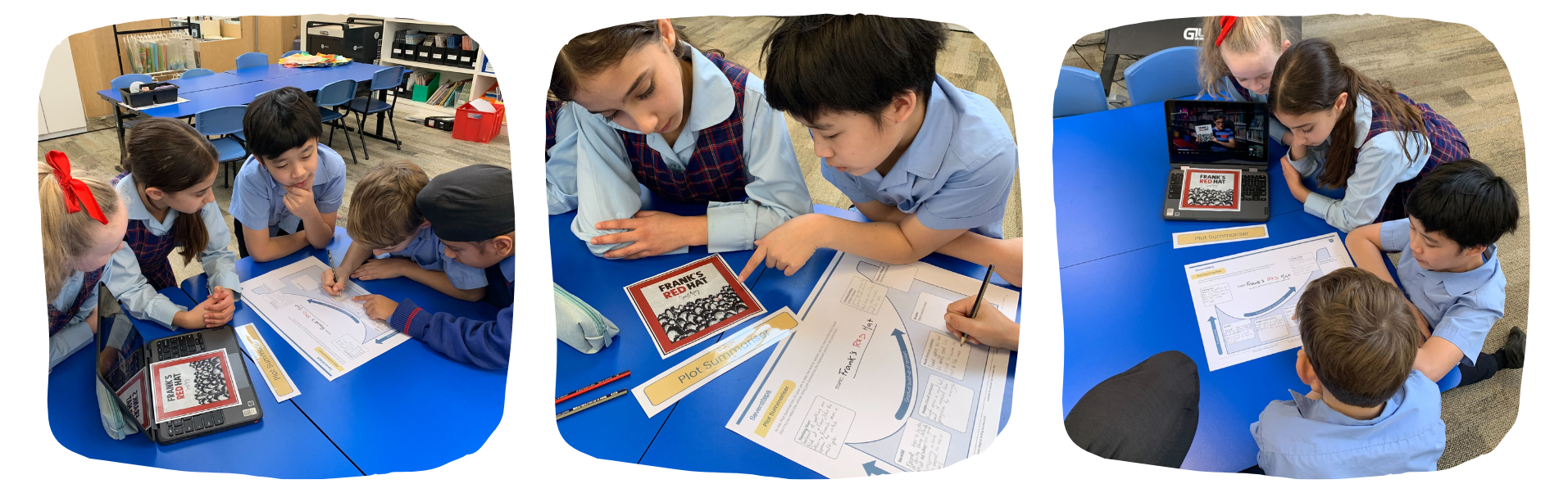
Each reading circle role includes a template to guide students’ thinking. You may even recognise some of these from our writing activities. That’s no coincidence. Using writing templates to analyse mentor texts helps students make powerful connections between reading and writing.
As students complete the templates, they deepen their understanding of how an author has crafted the text while simultaneously creating an exemplar they can refer to when generating ideas for their own writing. Rather than treating reading and writing as separate skills, students begin to see how they enhance each other. It’s an efficient way to build comprehension and strengthen writing at the same time – a win-win for both teachers and students.
Book Week 2026 Live Lessons
Reading Circles in Action
This concept is at the heart of our Book Week live lessons. Across two live sessions, we’ll use three roles from our Reading Circles resource to unpack the opening chapters of two texts from the CBCA 2026 Book of the Year shortlist.
In these lessons, we will:
- Model the roles and structure so everyone knows what’s expected when using the reading circles resource
- Share ideas so we can all learn from each other, the aim is for students to bounce ideas off each other in order to deepen their understanding of the text.
- Try different roles so you get a chance to see the text from multiple perspectives and respond in a variety of ways.
- Prompt discussion to help you gauge students’ understanding.
Reading Circles resource
Everyone who attends will get the complete Reading Circles resource so that you can continue analysing the text in your classroom. The resource includes 10 ready-made templates for the roles of:
- Discussion Director: Guides the group discussion and keeps everyone on task.
- Plot Summariser: Summarises the important parts they’ve read in dot points on the story graph.
- Sizzle Spotter: Spots the Sizzling Starts techniques and describes their impact on the reader.
- Tension Tracker: Tracks the techniques used by the author to build tension.
- Endings Explorer: Explores the action climax and the emotional resolution in the ending.
- Dialogue Detective: Identifies examples of dialogue and how they add to the story.
- Show Scene Analyst: Finds examples in the text that show, rather than tell the reader.
- Character Captain: Shares observations about the main characters in the story.
- Setting Surveyor: Shares observations about where the story takes place.
- Vocabulary Builder: Looks for new and interesting vocabulary in the text.
NEW for Seven Steps members!
We’ve plotted all of the texts shortlisted for the CBCA Young Reader’s Award on the Seven Steps Narrative Story Graph. These 6 books are fantastic for students in Years 2–9 and cover a variety of themes to explore with your students. We will be sharing this resource at the end of the live lesson to help you pick which texts you want to read with your students.
Did you know we have complete Read to Write units? They are part of the Read to Write Course in Teacher Hub, which won New Digital Course of the Year at the Digital Education Awards.
Want to learn more about our memberships? You can find more information here.
Try some extra writing activities for Book Week
There are so many brilliant ways to explore texts with your students. Here are a few ideas for you to try during Book Week or any other week!
- Make a comic strip or storyboard with captions showing the main events of the story. Download this editable Storyboarding Template.
- Use the first line from the book as inspiration to brainstorm ideas for a Sizzling Start: Action Activity – Borrowing Beginnings.
- Read the book backwards – that is, start reading from the last paragraph back to the first. This is great for looking at the structure of a text.
- Write an alternative ending to the book. Try using Writing Challenge – Finish It or Template – Endless Possibilities.
- Create a new character using Action Activity – Creating Characters.
- Turn a scene from the book into a film script.
- Write a poem about the book.
Check out even more Book Week activities from previous years:
Book Week 2025 – Book an Adventure
Book Week 2024 – Reading is Magic
⭐️ Don’t forget to tag us on socials (Facebook | Instagram | X) @sevenstepswriting or #sevenstepswriting to share your Book Week writing activities with the Seven Steps community. ⭐️


FREE WRITING MODULES
Teach them to love writing
The first Step is Sizzling Starts.
Easy to teach …
Fun to learn …
And rocket fuel for writing!